
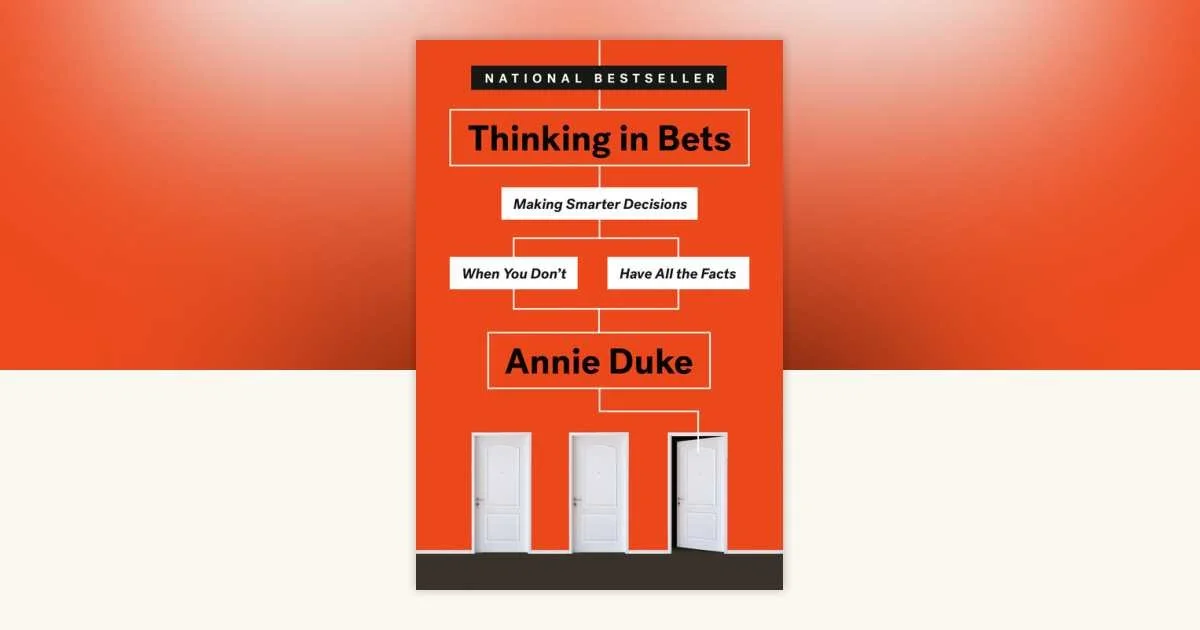
From the Stack: Thinking in Bets, by Annie Duke
I've never thought of myself as a gambler, or much of a risk-taker. And yet leadership asks for exactly that, again and again: making a call without all the information, without a crystal ball to confirm you're right. Wouldn't it be great if we had one? We don't. But you can still get comfortable without complete information, if you're confident in your process, your direction, and whether the how of a decision matches your values.
HERE'S THE GIST
Annie Duke, a former professional poker player turned decision strategist, argues that most of us think about decisions the wrong way. We judge whether a decision was good based on how it turned out. She calls this habit “resulting.” A good decision can still produce a bad outcome, because luck and hidden information are always part of the equation. Chess is a game of full information. Poker, like leadership, rarely is.
THE LINE THAT STUCK
“A great decision is the result of a good process, and that process must include an attempt to accurately represent our own state of knowledge.”
MY TWO CENTS
For nonprofit leaders, this reframe matters more than most business books admit. Duke's world is poker and markets, where bets are flexible and you can walk away. Nonprofits don't have that luxury. There's no inventory to liquidate, no product line to sunset. It's a service model, and the real lever most leaders are pulling isn't margin. It's cash flow. And cash flow decisions are rarely just numbers. Most often, they're decisions about people: who stays, what role survives a restructure, whose program gets the next round of funding. That's never the easy call. When you're deciding what to cut, what to keep, and what to guess about the next 3, 6, or 18 months, resulting is a trap. A program that worked doesn't mean the decision to fund it was sound. A hard call that didn't pan out doesn't mean it was wrong. Judge the process, not just what happened next.
PICK THIS UP IF
you're the one in the room making the call when nobody has full information. Most weeks, that's exactly the job.